Black Women Built the Bank Before Anyone Let Them in the Door


Black Women Built the Bank Before Anyone Let Them in the Door
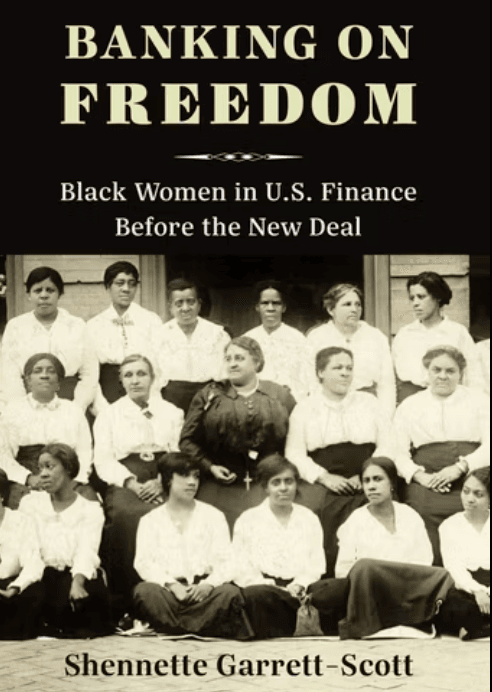
There is a book sitting on my desk right now that every Black household in America needs to own. Not borrow. Own. But before I tell you about the book I need to talk about what is happening in plain sight because that is exactly what this book is about and most people do not even realize they are watching the same movie that has been playing since before any of us were born.
Halle Berry is one of the most gifted actresses this industry has ever produced. Years of serious craft. Range that most actors spend a lifetime chasing. And the year Hollywood finally handed her that Oscar, the historic first for a Black woman in a leading role, she had spent Monster's Ball in a degrading sexual role opposite Billy Bob Thornton, playing a grieving mother who finds comfort in a man whose character had a direct hand in destroying her family. That was the role that broke the ceiling. Not her discipline. Not her years of work. Not her range as a serious artist. The Academy moved when she made herself available in a way that satisfied a very specific gaze. That is not an accident. That is a transaction. And the terms of that transaction tell you everything about who actually controls the room.
Then look at One Battle After Another. Teyana Taylor is one of the most gifted multi-hyphenate artists of her generation. Vocalist. Dancer. Director. Actress. Built like architecture and sharp as a blade. And when Hollywood finally handed her a mainstream platform alongside Leonardo DiCaprio, the door they left open was Perfidia, a woman introduced to the audience through her sexuality and her chaos. She abandons her daughter. She is framed from the very first scene as something that happens to a man rather than someone who is fully and completely herself. That is the Jezebel casting call that has been circulating in Hollywood since this industry was born. You can be on screen. You can even be brilliant on screen. But your entry point into mainstream visibility has to pass through your body first. Teyana Taylor is so gifted she won the Golden Globe anyway. She earned the Oscar nomination anyway. But the question is not whether she performed well inside the door they gave her. The question is why that was the only door they left unlocked.
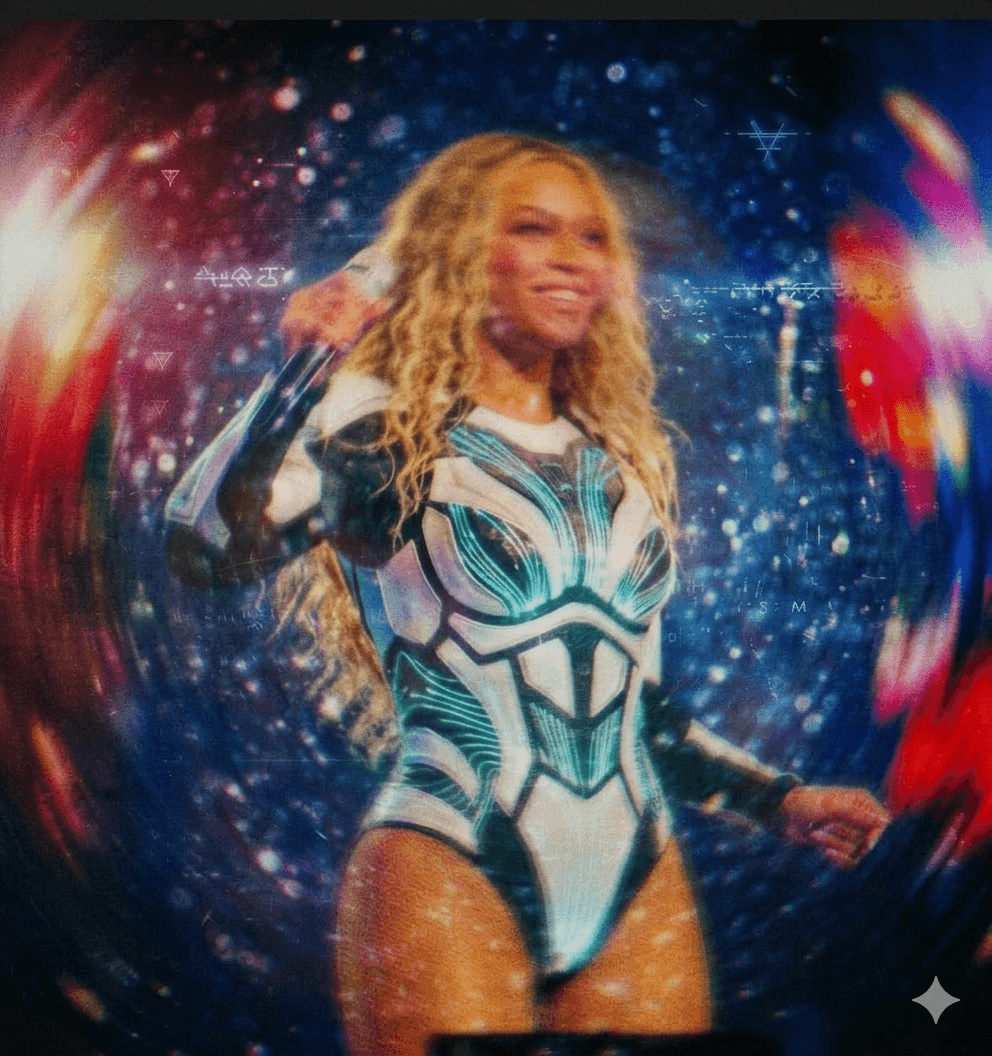
And then there is Beyonce. A married woman. A mother. A business entity that employs hundreds of people and has more leverage than almost anyone in the music industry living or dead. And the unspoken contract that the industry has never torn up is that she must still perform half-dressed in front of millions every tour cycle to hold her position. This woman does not need attention. She has Jay-Z, she has Ivy Park, she has equity, real estate, streaming infrastructure, and generational wealth already in motion. And the industry's standing requirement is still that the body remains on the table as part of the offering. The moment Beyonce decides to walk on that stage fully covered and fully on her own terms, watch how fast a certain segment of the public starts questioning whether she is still relevant. The body is the collateral they never let her fully reclaim.

Now look at the brothers because this is not a one-sided conversation. Denzel Washington is without question one of the greatest actors who has ever lived. He gave us Malcolm X frame by frame, one of the most dignified and electrifying portrayals of Black intellectual and revolutionary manhood ever committed to film. The Academy did not move. He gave us John Q, a father so desperate to save his son's life that he took a hospital hostage because the healthcare system designed to protect his family refused to do its job. The story of every Black father who has ever had to fight a system with his bare hands just to keep his child alive. The Academy still did not move. But the moment Denzel put on a dirty badge in Training Day and played a predatory corrupt cop brutalizing his own community, that is when they handed him the award. The message from Hollywood to Black men has been just as consistent as the message to Black women. We will celebrate your dysfunction before we will celebrate your dignity.
Now I need you to hold all of that in your mind while I introduce you to a woman named Maggie Lena Walker.
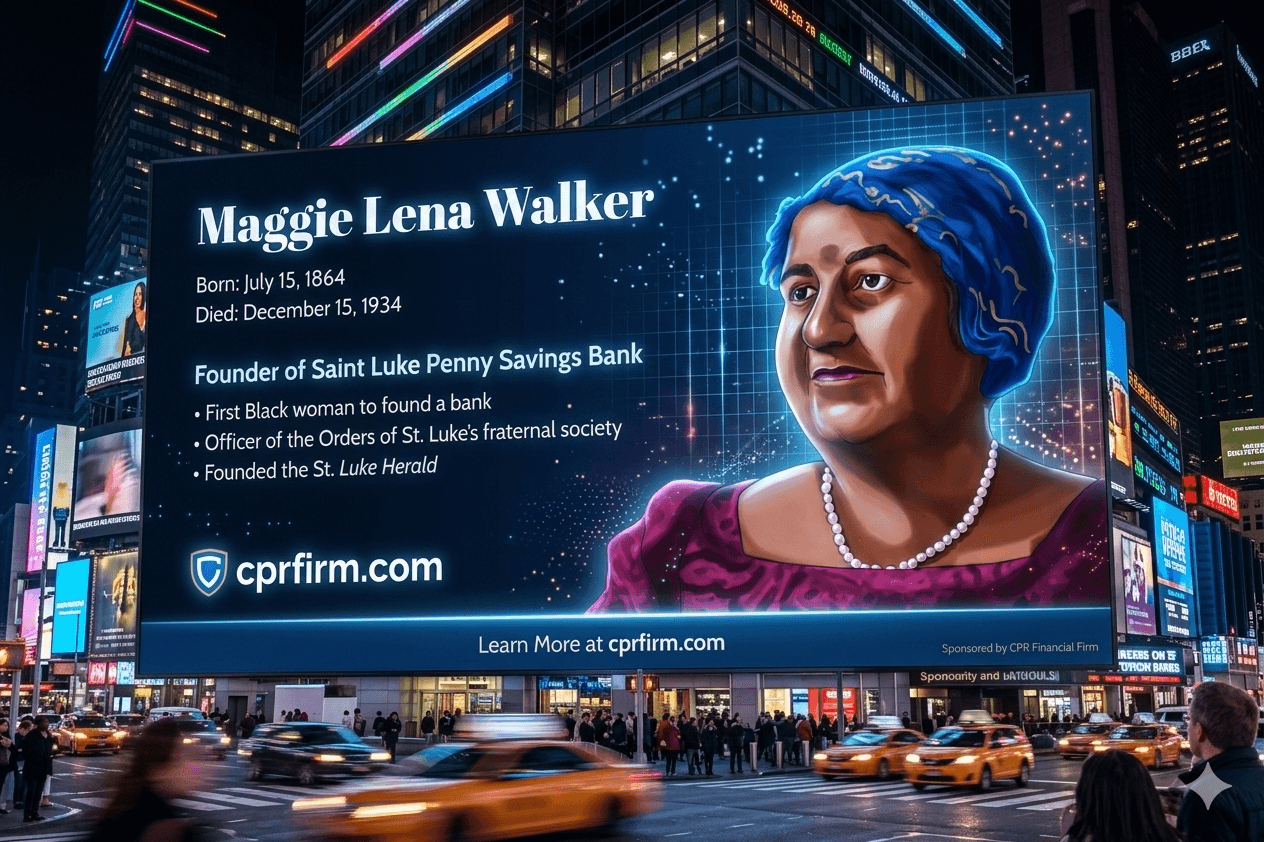
In 1903, while Jim Crow was the law of the land and Black people were being systematically excluded from every financial institution in America, Maggie Lena Walker chartered a bank. She became the first Black woman in United States history to found a bank. She did not do it because someone gave her permission. She did not do it because Hollywood cast her in the right role or because the Academy decided she was finally respectable enough to be recognized. She did it because she understood something that the entertainment industry has spent over a hundred years trying to make Black women forget. Your value is not in your body. Your power is in your ability to build institutions that outlast you.
Shennette Garrett-Scott documents all of this in Banking on Freedom: Black Women in U.S. Finance Before the New Deal and I need you to understand what this book actually is. It is not a history lesson for people who like history. It is a blueprint that was drawn up over a century ago and then buried so deep that most of the people who need it most have never heard of it.
Walker came up through the Independent Order of St. Luke, a Black mutual aid and fraternal organization built after the Civil War. These fraternal orders were shadow economies. They were what Black communities built when every legitimate financial institution in America had a sign on the door that said not for you. Walker became the Right Worthy Grand Secretary of the Order in 1899 and she did not just manage it. She transformed it. She modernized the record-keeping. She expanded membership across the country. She built a philosophy of collective economics that Wall Street would not even begin to understand for another fifty years. And she did all of this while navigating the gender politics inside her own organization, because the respectability trap that Garrett-Scott writes about in Chapter 5 of this book was not just coming from white institutions. It was coming from inside the house too.
That chapter on respectability politics is the one that should make every Black man who has ever questioned a strong woman sit down and do some real thinking. Black women in Walker's era had to perform a very specific version of themselves just to be taken seriously. Proper. Controlled. Non-threatening. Palatable. They had to walk into rooms and shrink themselves enough that the men in those rooms felt comfortable enough to acknowledge their intelligence. Sound familiar? It should. Because what Hollywood does to Halle Berry, what it does to Teyana Taylor, what it demands of Beyonce every time she steps on a stage, is the same transaction. The packaging changes. The tax stays the same. Show us enough of yourself that we feel comfortable, and we will let you operate. That has been the deal for Black women in every room, from the boardroom to the sound stage to the fraternal hall to the bank lobby.
Walker refused those terms as much as any Black woman in her era could afford to. She built the St. Luke Penny Savings Bank specifically for the Black domestic workers who were washing white people's clothes and raising white people's children and then being turned away from every bank in Richmond, Virginia when they tried to deposit their own money. She built a bank for the woman who only had pennies to deposit because she understood that pennies compound. She understood that dignity is not reserved for people who already have enough. She built owned media through the St. Luke Herald because she knew that economic power without narrative control is just wealth waiting to be taken. She understood that you cannot separate financial freedom from the story that gets told about you.
Go ask an Ethiopian about their household. Ask them who kept the books when their father came home at the end of the day. Their mother was not in the background decorating the space. She was the CFO of that home. She knew every debt, every obligation, every investment, every shilling coming in and going out. She may never have had a title. She may never have had a credential on the wall. But nothing moved financially in that house without her knowledge and her blessing. That is not unique to Ethiopia. Go through West Africa. Go through the Caribbean. Go through the American South. Black women have been the financial architects of Black family life for as long as Black families have existed. The long hair and the shape have never been a substitute for the mind. Only a weak man confuses the two.
If you want a lapdog, if you want someone who will nod and agree and never push back on your thinking, then yes, a woman built in the tradition of Maggie Lena Walker is going to make you deeply uncomfortable. But if you want a wife, a partner, a co-builder of something that outlasts both of you and lands in your children's hands intact, then you need to understand that her ability to check your math, challenge your plan, and redirect the capital when you are moving wrong is not disrespect. It is the whole point. A woman who challenges you financially is not undermining your leadership. She is protecting your legacy.
This is exactly why this book is not just for your daughters. It is essential reading for your sons. Your sons need to grow up understanding that a woman who can manage capital, navigate hostile institutions, build community infrastructure, and still hold a household together is not a threat to their manhood. She is evidence that they chose well. The financially literate, strategically minded Black woman is not the exception. She is the historical standard that a century of media, Hollywood casting calls, and systemic conditioning has worked overtime to make us forget.
Maggie Lena Walker did not have social media. She did not have a personal brand or a streaming deal or a stadium tour. She had organizational discipline, community trust, and the clarity that individual wealth means nothing if the community around you is economically starved. She built all of it inside a country where the law itself was designed to stop her. No capital markets access. No political protection. No cultural validation from any institution outside her own community. She built anyway.
If she could do that in 1903, the question for every Black family reading this in 2024 is straightforward. What exactly is our excuse.
Buy Banking on Freedom. Put it in your home. Read it yourself first because you need to understand what you are giving before you give it. Then hand it to your daughter so she knows she comes from a lineage of builders and not ornaments. Hand it to your son so he grows up with a real picture of what a financially capable Black woman looks like not as an exception to be managed but as a standard to be honored. Give it to the couple in your family that is just starting out so they build their household on something more durable than vibes and good intentions.
Garrett-Scott gave us the receipts. Maggie Lena Walker laid the foundation. The only question left is what we are going to build on top of it.
Banking on Freedom is available now. Buy it like your children's financial future depends on it.
Because it does ya dig! BANK ON FREEDOM